How to Remove Lily Pollen From Upholstery Safely
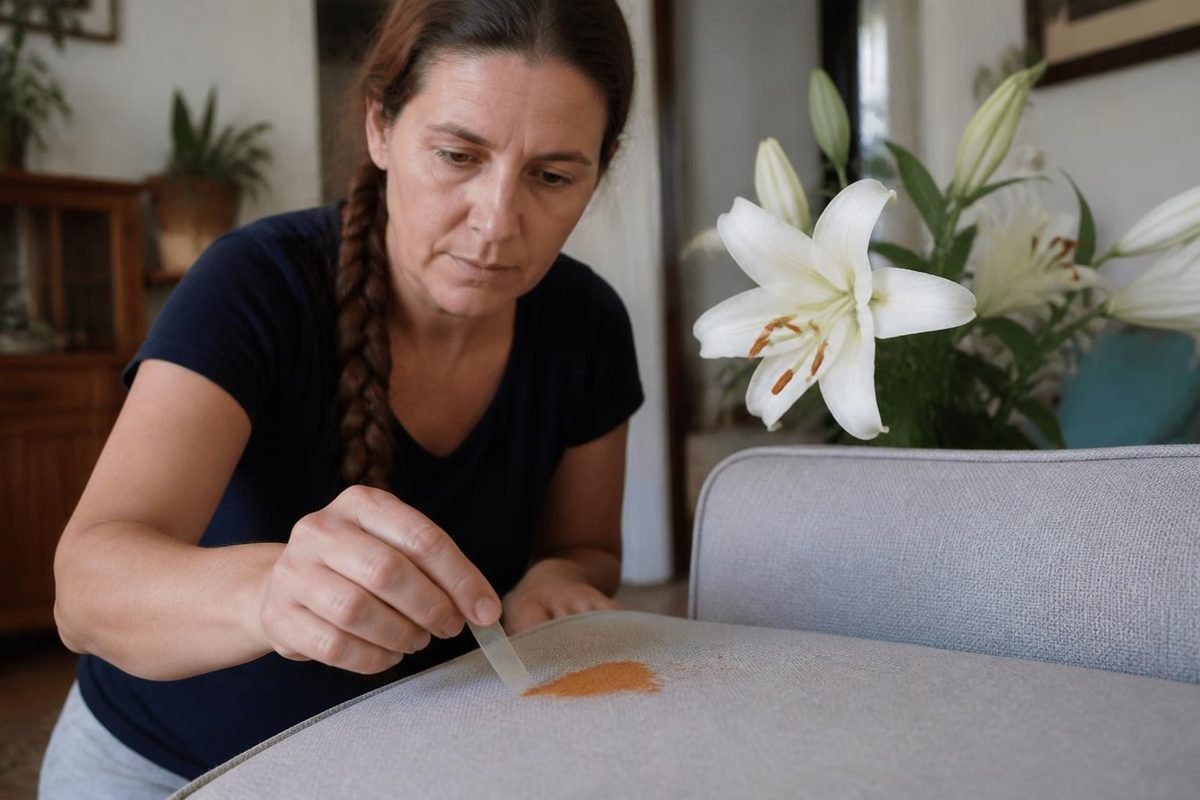
Lift dry lily pollen from upholstery with a vacuum nozzle or the sticky side of tape, taking care not to rub it into the fabric. Check the upholstery care label before treating any color that remains, and keep water away from loose pollen.
Start with dry hands and a light touch
Stop anyone from sitting on the affected area while you work. If the pollen is on a loose cushion, leave the cushion in place so the powder does not spill onto the floor or another part of the sofa.
Do not brush the pollen with your hand or a cloth. That can push the fine yellow powder deeper into the fibers and make the mark harder to remove. Avoid wetting it at this stage for the same reason: you want to lift away as much loose material as possible first.
Lift away the loose pollen
Hold a vacuum nozzle just above the pollen and let the suction draw up the powder. Avoid pressing the nozzle into the fabric. Check that the attachment is clean before bringing it near the upholstery, and work slowly from the edge of the deposit toward the center.
If a little dry pollen remains on the surface, touch it gently with the sticky side of clear tape, then lift the tape straight off. Use a fresh piece as the tape picks up powder. Test the tape on a hidden area first, especially on delicate or textured fabric, since adhesive can disturb some fibers.
Check the fabric before treating a stain
Once the loose pollen is gone, look for a yellow mark. Find the furniture care label before applying anything. A label marked W generally permits water based cleaning products, while S calls for a solvent based product. A label marked WS allows either type; X generally means vacuuming or professional cleaning only.
Follow the furniture maker's instructions if they are available. For silk, velvet, antique upholstery, an X label, or a fabric you cannot identify, ask an upholstery professional for advice rather than experimenting. A cushion cover is not necessarily washable just because it has a zipper.
Treat any remaining color carefully
For fabric labeled W or WS, use a product intended for water safe upholstery and follow its directions. First test it on a hidden area and let that spot dry so you can check for discoloration or a water mark. Use only a small amount, and blot gently with a clean white cloth rather than scrubbing.
For an S label, follow the furniture maker's guidance or contact a professional cleaner. Do not soak the fabric or use household bleach. If the color remains after careful treatment, stop and seek professional help rather than repeatedly wetting or rubbing the spot.
Questions about lily pollen stains
Can I use a damp cloth straight away?
No. Lift the loose pollen while it is dry first, so the cloth does not spread the powder across the fabric.
Will tape remove every trace?
Not always. Tape can lift dry surface powder, but a yellow stain may remain in the fibers.
Should I put the cushion in sunlight?
Do not rely on sunlight as a treatment. Prolonged exposure can fade upholstery, sometimes unevenly.
What if the stain has already been rubbed?
Stop rubbing, remove any loose powder gently, and check the care label. A professional cleaner may be the safest choice for a stubborn mark.
More background: https://theologischer-ausblick.com/blumen-bei-trauerfeiern-und-beerdigungen-symbolik-und/